
Every vehicle manufacturer provides recommended tire air pressure guidelines, typically found on a sticker attached to the driver's side door jamb, the pillar where the door latches. You might also spot it on the door's rear edge, inside the glove compartment, or on the fuel filler door. For quick reference, check your owner's manual.
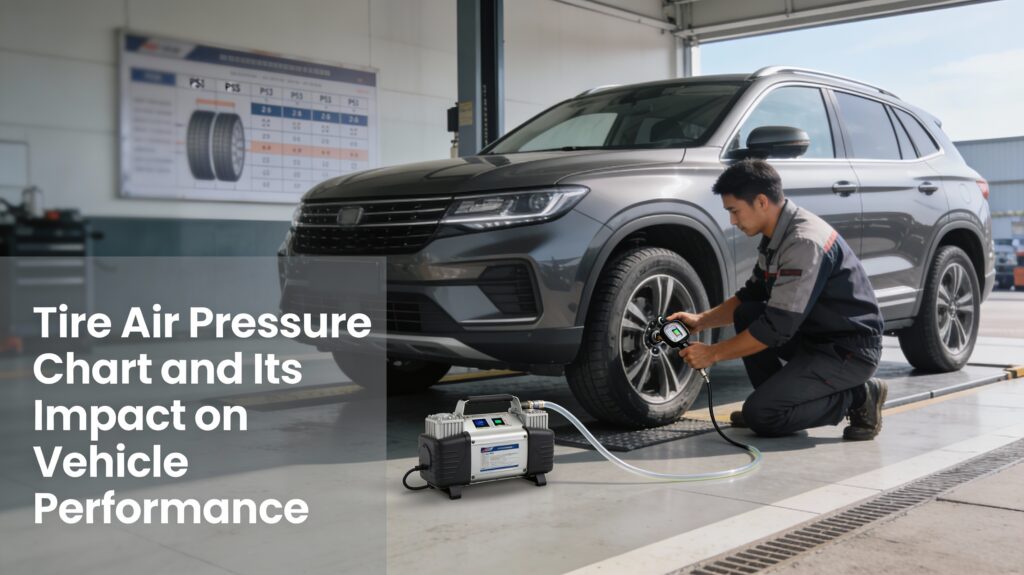
Sticking to these recommended PSI levels is key to efficient vehicle operation and longevity. Below is a detailed tire air pressure chart based on common vehicle types and tire sizes.
| Vehicle Type | Tire Size | Recommended Tire Pressure (PSI) |
| Small Cars | 185/65R15 | 30 – 35 |
| Mid-Size Cars | 215/60R16 | 32 – 36 |
| Large Cars | 225/55R17 | 32 – 38 |
| Small SUVs | 225/65R17 | 30 – 35 |
| Mid-Size SUVs | 235/60R18 | 32 – 38 |
| Large SUVs | 265/70R17 | 35 – 40 |
| Crossovers | 245/55R19 | 30 – 35 |
| Heavy-Duty SUVs | 285/75R16 | 40 – 45 |
| Sports Cars | Varies | 32 – 37 |
| Hybrid Cars | Varies | 35 – 40 |
| Electric Vehicles | Varies | 35 – 40 |
Maintaining the correct tire pressure isn't about blindly following a number, it's a vital factor that impacts multiple aspects of your car's functionality. Here's a breakdown of the key effects:
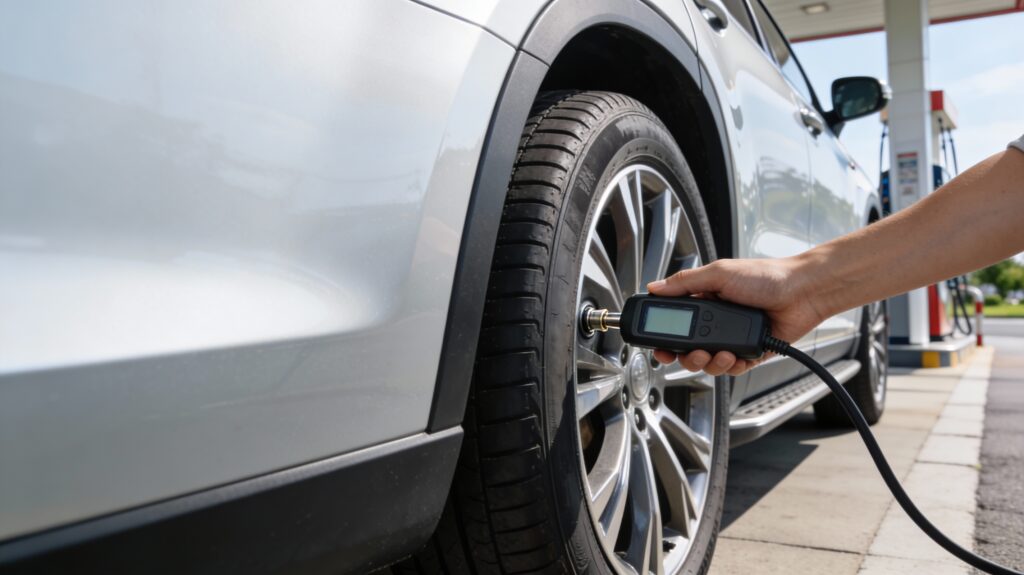
Keeping your tires at the right PSI is a simple yet powerful way to ensure safe, efficient driving. Follow these expert tips to stay on top of tire maintenance:
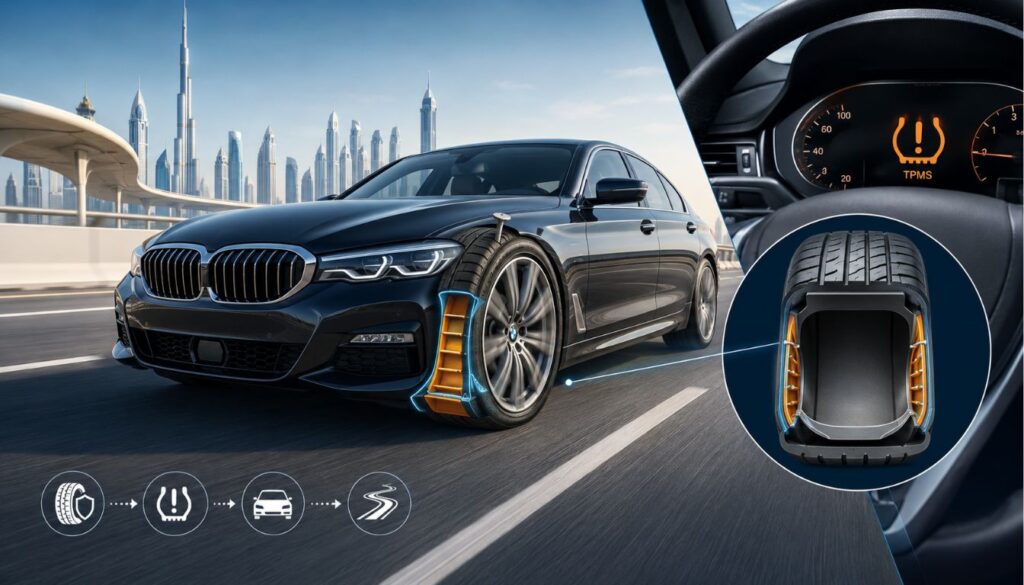
At its core, tire air pressure is a cornerstone of vehicle performance and driver safety. Here's why getting it right matters:
For premium tire options and expert advice, check out mathyo tyres, an online tyre shop at mathyotyres, to find the best fits for your vehicle
Under-inflated tires increase rolling resistance, leading to higher fuel consumption, uneven wear, reduced handling, and a higher risk of blowouts or accidents.
Yes, over-inflation can cause a harsher ride, reduced traction (especially on wet roads), and premature center tread wear, compromising safety and comfort.
The recommended PSI varies by vehicle type and tire size. Refer to the tire air pressure chart in this guide or your owner's manual for specifics. It's usually listed on the driver's side door jamb.
Check your tire pressure at least once a month and before long trips. Also, monitor it during significant temperature changes, as weather can affect PSI levels.
For every 10°F drop in temperature, tire pressure can decrease by about 1 PSI. Always check and adjust in cold weather to maintain optimal levels.
For reliable tire purchases and professional maintenance, visit mathyo tyres, an online tyre shop, for a wide selection tailored to your needs.