
Driving around Dubai often involves using major roads that pass through electronic toll gates. Whether you are a UAE resident, tourist, new driver or vehicle owner visiting the city, understanding Dubai Salik is important for managing road toll payments and avoiding unexpected fines.
Salik is Dubai's electronic road toll system. It automatically identifies registered vehicles passing through designated toll gates and deducts the applicable charge from the associated account. Drivers do not need to stop at a toll booth or make cash payments at the gate.
To use the system correctly, vehicle owners need to understand Salik registration, tag installation, toll charges and account balance management. Keeping sufficient funds in your Salik account also helps prevent payment-related violations.
This guide explains how Dubai Salik works, where the toll gates are located, how much drivers pay and how to register, recharge and manage an account.
Dubai Salik is electronic toll collection system, operated by Salik Company in coordination with the Roads and Transport Authority (RTA).
The system uses Radio Frequency Identification (RFID) technology to recognise an activated Salik tag attached to a vehicle's front windscreen.
When a registered vehicle passes through a toll gate, the electronic reader detects its tag and records the crossing. The applicable toll fee is then automatically deducted from the vehicle owner's Salik account.
The process is straightforward:
There is no need to stop, slow down to make a payment or interact with a toll operator.
Vehicles using Dubai's Salik toll gates generally need to be registered in the system and have the appropriate tag.
Each registered vehicle must have its own Salik tag. A tag should not be transferred between vehicles because it is associated with the registered vehicle and account details.
Tourists and visitors driving rental vehicles should check with their rental company about Salik registration and how toll charges are billed.
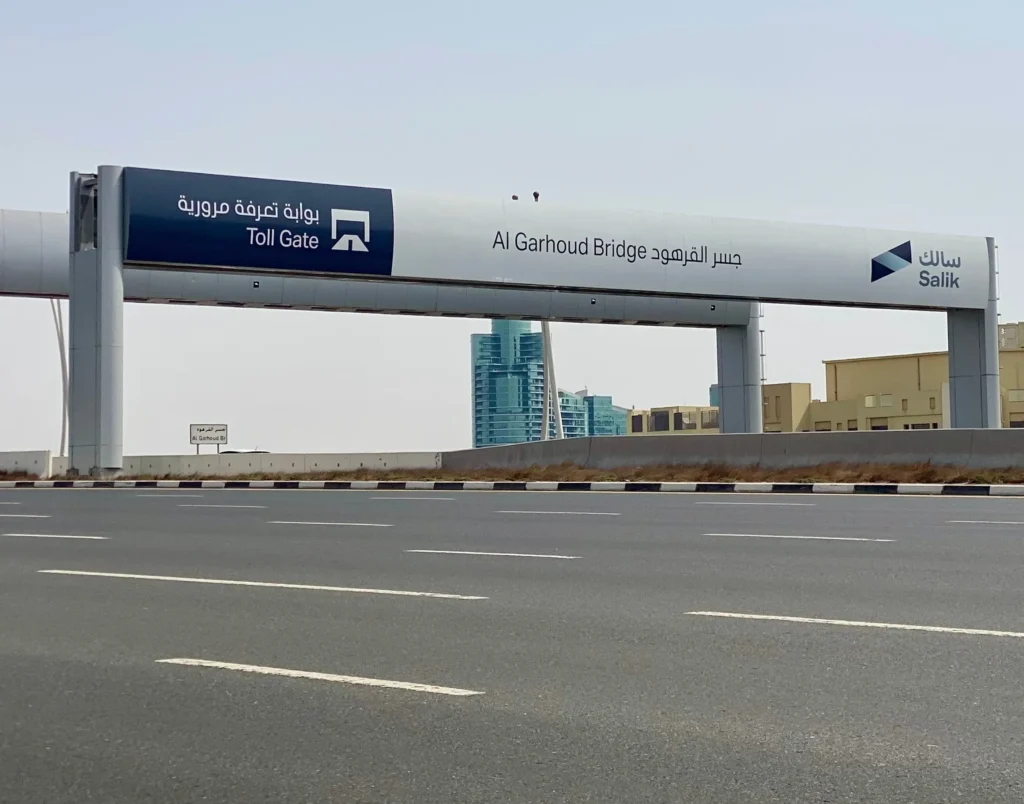
Dubai has several electronic toll gates positioned along major roads and transport routes. These gates help manage traffic flow and collect toll payments from vehicles using designated routes.
The main Salik toll gate locations include:
|
Salik Toll Gate |
General Location |
|
Al Barsha |
Sheikh Zayed Road |
|
Al Garhoud |
Near Al Garhoud Bridge |
|
Al Maktoum Bridge |
Dubai Creek crossing |
|
Al Mamzar North |
Al Ittihad Road |
|
Al Mamzar South |
Al Ittihad Road |
|
Airport Tunnel |
Near Dubai International Airport |
|
Jebel Ali |
Sheikh Zayed Road |
|
Al Safa North |
Sheikh Zayed Road |
|
Al Safa South |
Sheikh Zayed Road |
|
Business Bay Crossing |
Near Business Bay and Al Khail Road |
These are the established Salik gate locations. Drivers should consult the official Salik website for the latest operational information and any newly introduced tolling locations.
Yes, each chargeable crossing is generally billed according to the applicable toll rate.
However, certain rules can affect how crossings are charged. For example, Al Mamzar North and Al Mamzar South have a special arrangement under which passing through both gates in the same direction within one hour is charged as a single crossing.
Check the current official Dubai Salik terms for applicable exceptions and crossing rules before planning frequent journeys.
Dubai introduced variable Salik pricing on 31 January 2025. The amount drivers pay depends on the day and time they pass through a toll gate.
The pricing structure is designed to reflect traffic demand, with higher charges during peak commuting periods and lower charges during off-peak hours.
The published base toll rates are:
|
Day and Time |
Base Toll Charge |
|
Monday to Saturday, 6 AM–10 AM |
AED 6 |
|
Monday to Saturday, 10 AM–4 PM |
AED 4 |
|
Monday to Saturday, 4 PM–8 PM |
AED 6 |
|
Monday to Saturday, 8 PM–1 AM |
AED 4 |
|
Daily, 1 AM–6 AM |
Free |
|
Sunday, 6 AM–1 AM |
AED 4 |
Important VAT update: From 1 June 2026, 5% VAT applies to Salik toll transactions. Therefore, the corresponding amounts including VAT are AED 6.30 for a peak crossing and AED 4.20 for a standard off-peak or Sunday crossing.
For example, a driver passing through a chargeable gate during a weekday morning peak period pays AED 6.30 including VAT.
The standard free toll period is between 1 AM and 6 AM every day.
Outside these hours, the applicable charge depends on the day and time.
Sunday pricing is generally AED 4 before VAT throughout the chargeable period, rather than using the weekday peak and off-peak distinction. Public holidays and special events may have different arrangements, so check official announcements when relevant.
During Ramadan, peak-hour schedules may also change.
Understanding Dubai Salik charges is only one part of driving safely and confidently across Dubai. Regular vehicle maintenance, reliable tyres and proper tyre pressure are equally important, particularly when travelling on busy highways and long-distance routes.
Whether you are commuting daily or planning a road trip, mathyo tyre can help you keep your vehicle road-ready with professional tyre services and solutions. Visit mathyo tyre to explore tyre-related services and support your driving needs across the UAE.