Understanding the condition of the tires you own is essential for many reasons. The tires degrade with time, even though they've got ample tread. If you don’t know how to check tyre year, look for the DOT number on the tire sidewall:
Example:
Tires are made of various compounds that may become degraded over time, especially when exposed to external factors like UV rays or moisture. As tires age, the rubber may become dry and crack, weakening their structure and performance. The deterioration could lead to:
To find out the time of your tire's life, you need to locate that DOT label on the wall. The DOT code, which is also referred to in the form of a Tire Identification Number(TIN), is important information regarding the tire's dimensions, the load capacity, and most importantly, the manufacturing date.
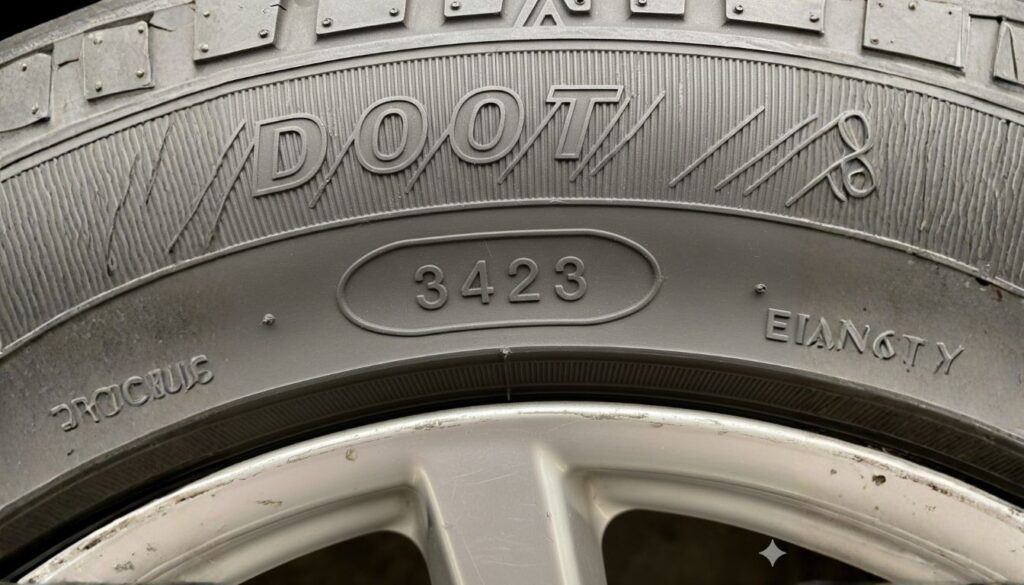
This code can normally be found on the sidewall. It is composed of a sequence of letters and numbers that provide specific information regarding the tire. To determine the date of manufacture, you need to seek out a 4-digit number in that DOT number.
The last four numbers of the DOT code represent the date of manufacture in tires manufactured after 2000. The first two numbers represent the week of manufacturing, and the other two numbers represent the year. For instance, if you have the number "2314," it means that the tire was made in the 23rd week of 2014.
In this case, the last three digits in the DOT code are the manufacturing date. The first two numbers represent the week of manufacturing, and the last digit indicates the year in the decade. To differentiate these tires from earlier decades, a triangle symbol is usually depicted.
Check your tire today by checking the signs mentioned below:
The importance of replacing tires cannot be overstated. They are essential to safety as well as performance and efficiency.
Tires that are worn out have less tread depth, which decreases grip and traction. This could make it difficult to stop, accelerate, and turn with safety, especially in icy or rainy conditions.
The worn-out tires have a higher rolling resistance, which means they require much more power to spin and reduce car performance.
The wear and tear of tires can lower the efficiency of your vehicle by as much as 5 percent. This is due to more resistance to rolling.
To verify the year of the tire, you need to look for the DOT number in the sidewall. This is a 4-digit number which indicates the week and the year that the tire was produced. The first two numbers represent the week, and the final two numbers indicate the year.
If your tire is older than 10 years, it is recommended to replace it, regardless of the tread depth. This is because tires degrade with time and are more likely to suffer from an air blowout.
The DOT number is typically located close to the bead of tyres, in the sidewall. It's a four-digit number that is elevated over the rest of the sidewall.
The reason for this is that the rubber compound used in tires breaks down due to heat, sunlight, and oxygen. Tires older than 10 years are much more likely to suffer blowouts, even if they have a sufficient tread depth.