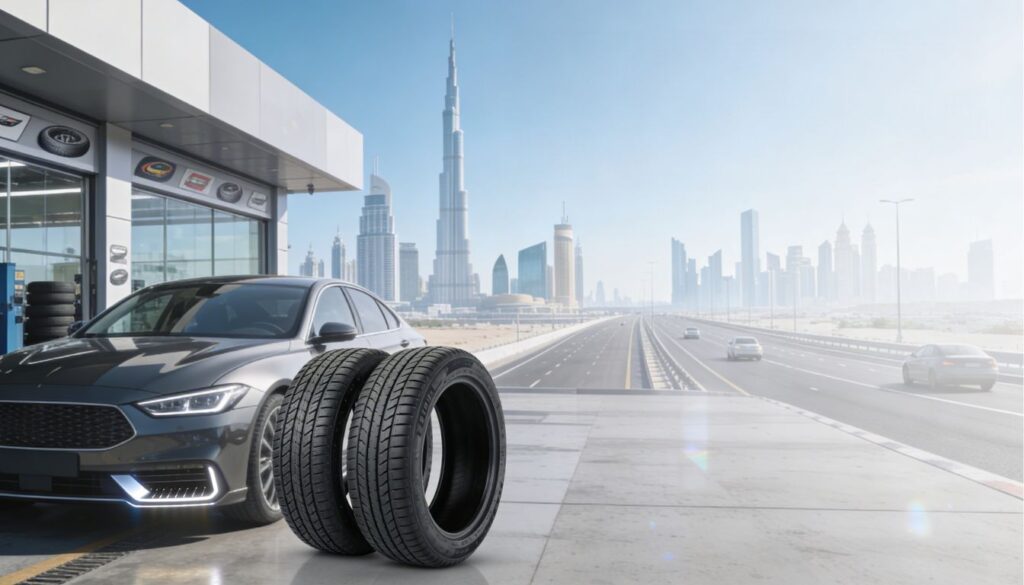
Having good tires is essential to your car's stability and handling. Tires wear out and lose their effectiveness over time, which can lead to less grip, less fuel efficiency, and a higher chance of accidents. To maintain maximum efficiency and safety, tire conditions should be checked frequently.
In this blog, we'll show you how to determine in under a minute if you need new tires.
The only part of your car that actually touches the road is the tires. Therefore, your safety, handling, and fuel efficiency are all severely affected by their condition. If you inspect your tires on a regular basis, you will know when it is time to replace them.
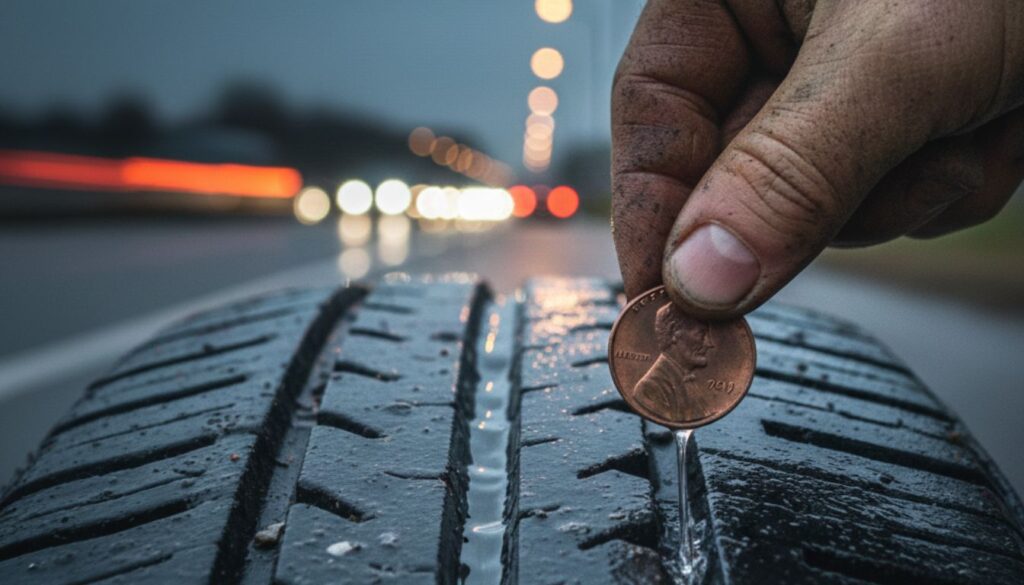
You don't need any special equipment or training to measure the depth of your tire's treads. Get yourself a dirham coin, and you'll be set.
It's about 2/32 of an inch from the top of a dirham coin to the top of Abe's head. Your tread depth is less than 2/32 of an inch if you can see the top of his head. Driving on tires with such low tread depth may be illegal in several places.
With proper tire tread depth, your car is able to grip the road. This is especially important when the roads are snowy, wet, or have other bad conditions. When your tires have less tread, they are more likely to slip and slide, which can be dangerous for you and other cars on the road.
When your tires are old, they put more stress on the rest of your car, which can cause other parts to wear out faster. Even though buying new tires is a big investment, it's one that's worth making.
If you need to change your tires, it's best to do so all at once so that you can ensure that they are all the same size and brand. If your tires don't match, one end of your car might not be able to move as quickly as the other, making it hard to control. Your tires are what keep your car on the road, so it's important to have a flat area.
If you only need to replace three tires, choose tires that are similar to the ones that are already on your car. If you are only changing two tires, you should only put those two tires on the rear axle. If you need new tires, you should look for a similar brand and size.
Used tires come with many concerns. If you don't know the tires' history, it's hard to tell if they've been underinflated, overloaded, or have internal damage that could cause failure. Uneven wear on used tires can create noise, vibration, and other issues, requiring replacement sooner than new tires. It's best to replace tires with new ones of the same category, size, load capacity, and speed rating.
It's important to check the physical state of your tires and to check the pressure of your tires often. Underinflated or overinflated tires can make it hard to steer, use more gas, and wear out the tires faster. Refer to the owner's instructions or the sticker on the inside of the driver's side door jamb to find out how much air should be in your tires.
Tires may be the most essential safety feature on your vehicle. Be sure to treat them correctly!
Checking the condition of your tires at least once a month and before long trips is suggested.
Tires should usually be replaced in sets of two or four to keep the car's handling and grip even.
Yes, signs such as excessive vibration, increased road noise, or decreased handling can suggest tire wear.
If you aren't sure about the state of your tires, you should have a professional check them out.
The length of time tires last depends on things like how you drive, the state of the road, and how well you take care of them. Tires can last between 25,000 and 50,000 miles on average.