
A low tyre pressure warning usually means one or more tyres have lost pressure, but it can also indicate a problem with the vehicle's Tyre Pressure Monitoring System (TPMS). Check your tyre pressures as soon as it is safe, inspect the tyres for visible damage, and have the system checked if the warning remains after the correct pressure is restored.
For Dubai drivers, a TPMS warning deserves attention because long highway journeys, high temperatures and everyday tyre wear can turn a small pressure problem into a more serious tyre issue.
TPMS stands for Tyre Pressure Monitoring System. It is designed to monitor tyre pressure and alert the driver when pressure falls below the vehicle's specified threshold.
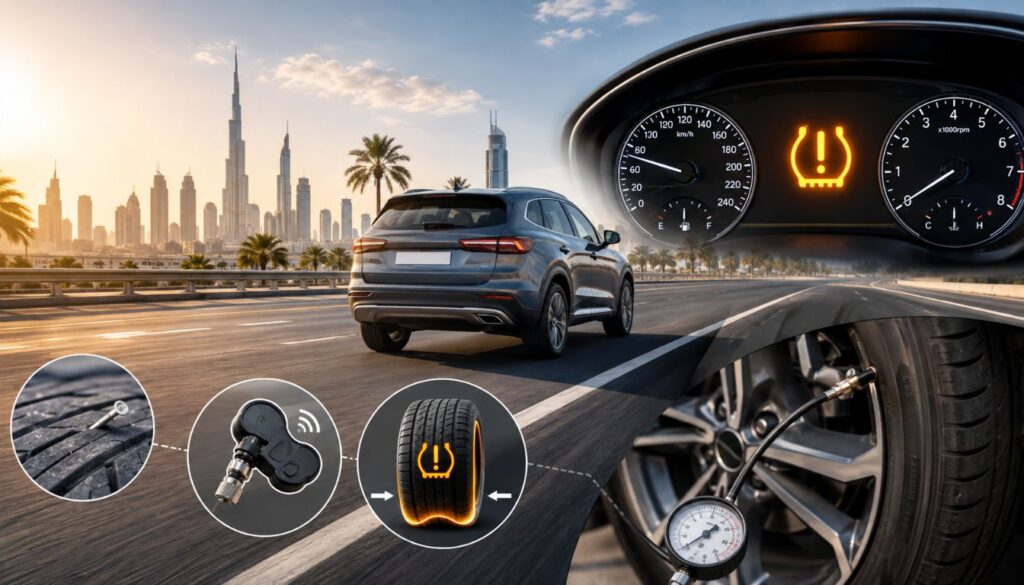
On many cars, the warning symbol looks like a tyre-shaped horseshoe with an exclamation mark in the middle.
When it appears, the first thing to consider is low tyre pressure.
However, the warning can have several causes:
So, the TPMS light meaning is not always simply "add air."
The actual tyre pressure should be checked before deciding what the warning represents.
If the warning appears while you're driving, don't ignore it.
Avoid sudden steering, hard braking and high-speed driving until you know why the warning appeared.
If the car feels unstable or you suspect a flat or damaged tyre, find a safe place to stop.
Look at each tyre for obvious signs of a problem, including:
A TPMS warning may not tell you which tyre is affected, so check all four.
Use a reliable pressure gauge and compare each tyre with the pressure recommended by your vehicle manufacturer.
The recommended pressure is normally listed on the vehicle information label or in the owner's manual.
Do not use the maximum pressure printed on the tyre sidewall as your normal inflation target.
If one tyre is significantly lower than the others, don't simply inflate it and forget about it.
Pressure loss can result from:
If the same tyre loses pressure again, it needs inspection.
Dubai's climate makes tyre-pressure management particularly important.
Temperature changes affect the pressure inside a tyre. A vehicle that has been parked overnight can show a different pressure reading from one that has just completed a long journey.
That is why drivers should check pressure according to the vehicle manufacturer's recommended procedure rather than guessing based on the weather.
High temperatures can increase tyre pressure as the air inside the tyre becomes hotter.
For additional guidance on tyre maintenance during Dubai’s hot weather, drivers can also refer to the Dubai RTA’s summer tyre maintenance and safety guidelines.
This does not mean you should deliberately release air from a hot tyre.
Instead:
Mathyo's existing tyre pressure and performance content covers the broader relationship between inflation and driving performance, while this guide focuses specifically on TPMS warnings and troubleshooting.
Not every warning means the same thing.
If one or more tyres have lost pressure, the TPMS may be working exactly as designed.
Potential causes include:
Correcting the underlying problem should resolve the warning.
If all tyres have the correct pressure but the warning remains, you may have a TPMS sensor problem.
Possible causes include:
This requires diagnosis rather than simply adding air.
A warning that disappears after inflation but returns later is a useful clue.
It can indicate that the tyre is losing pressure again.
A small nail or screw can cause gradual pressure loss without immediately producing a flat tyre.
A damaged or worn valve can allow air to escape slowly.
Changes in temperature can affect pressure readings, but repeated warnings should still be investigated.
If the tyre was inflated to an incorrect pressure, the warning may return.
If measured pressures remain correct but the dashboard warning continues, the monitoring system itself may need inspection.
A TPMS sensor is a component of the vehicle's tyre pressure monitoring system that provides pressure information to the vehicle.
Depending on the vehicle, sensors may be mounted inside the wheel and integrated with the valve assembly.
This means tyre work can involve more than simply removing and installing rubber.
A sensor can potentially be affected during tyre fitting, and some vehicles require a TPMS reset or relearning procedure after tyre replacement.
If your warning appeared immediately after fitting new tyres, tell the technician when the warning started.
That timing can help with diagnosis.
It depends on the condition of the tyre.
If the warning appears but the tyres have been checked and the vehicle is behaving normally, you should still investigate the cause promptly.
However, do not continue driving normally if:
Driving on a significantly underinflated tyre can create additional heat and stress.
If you are unsure whether the vehicle is safe to drive, arrange a professional inspection rather than taking the risk.
A TPMS system is a useful warning system, but it should not replace basic tyre maintenance.
Make pressure checks part of your routine, especially before long trips.
Look for:
A long journey from Dubai to Abu Dhabi or another emirate puts more time and distance on your tyres.
Checking pressure before leaving is a simple precaution.
If the same warning keeps appearing, investigate the cause.
Repeatedly adding air without finding the reason for pressure loss is not a proper solution.
If the tyre pressure light in Dubai appears after new tyres have been installed, don't immediately assume the tyres themselves are defective.
Several things may need checking:
First confirm that all tyres are inflated according to the vehicle manufacturer's recommendation.
The replacement tyre does not determine whether the sensor works. The vehicle's existing TPMS components must communicate correctly with the vehicle.
Some vehicles require sensors to be programmed or paired with the vehicle.
Some vehicles automatically relearn sensor information, while others require a manual procedure.
A sensor can potentially be damaged during tyre removal or installation and may need professional testing.
Yes, a faulty TPMS sensor can generally be replaced, but the correct procedure depends on the vehicle.
A technician may need to:
This is why simply replacing a dashboard component or repeatedly resetting the warning is not a good approach without diagnosis.
| Warning situation | Possible cause | Recommended action |
| Light appears suddenly | Low pressure or puncture | Stop safely and check tyres |
| One tyre repeatedly loses pressure | Slow puncture or valve leak | Have the tyre inspected |
| Pressure is correct but light remains | TPMS fault | Check sensors/system |
| Warning appears after tyre replacement | Relearn/programming issue | Have TPMS checked |
| Light plus vibration | Tyre/wheel problem | Stop and inspect |
| Light plus visibly flat tyre | Severe pressure loss | Do not continue driving |
This distinction is important because the same dashboard symbol can lead to very different solutions.
You should arrange an inspection if:
A professional inspection can determine whether you are dealing with a tyre problem, pressure problem, valve problem or TPMS problem.