
Every year, vehicle owners across the UAE replace tyres that have reached the end of their usable life. But what happens to those old tyres after they are removed from a vehicle? Rather than simply becoming waste, many discarded tyres can enter recycling processes that recover valuable materials and turn them into useful products.
Tyre recycling in the UAE plays an important role in responsible waste management by helping reduce the number of discarded tyres sent to landfill and supporting the recovery of rubber, steel and textile materials. These recovered resources can be processed into products used in construction, landscaping, sports facilities and other industries.
With the UAE continuing to develop its waste management and circular economy initiatives, tyre recycling is becoming an increasingly important part of sustainable resource management.
Understanding how old tyres are collected, processed and reused helps vehicle owners make more responsible disposal decisions. This guide explains the complete tyre recycling process, the materials recovered and how individuals and businesses can support sustainable tyre disposal.
Tyres are manufactured using a combination of rubber, steel, textile materials and other components. Their durable construction makes them suitable for demanding driving conditions, but it also means discarded tyres do not break down quickly in the natural environment.
When old tyres are improperly discarded or stored, they can create several environmental and practical problems.
Discarded tyres occupy considerable storage and landfill space because of their size and shape.
Recycling allows suitable materials to be recovered instead of sending every used tyre for final disposal. This helps reduce pressure on waste management facilities and supports more efficient resource use.
A used tyre contains several materials that can be separated and processed for further applications.
These include:
Recovering these materials helps reduce the need to rely entirely on newly produced raw materials.
A circular economy aims to keep useful materials in circulation for as long as practical instead of treating products as waste after their initial use.
The UAE has introduced waste management policies and industrial initiatives that support recycling, resource recovery and sustainable manufacturing.
In January 2025, the Ministry of Industry and Advanced Technology announced a used tyre recycling project aimed at converting discarded tyres into raw materials for new industries. The initiative supports the country's wider industrial and circular economy objectives.
Uncontrolled tyre dumping can create environmental and public health concerns.
For example, abandoned tyres can collect standing water, providing potential breeding areas for mosquitoes. Uncontrolled burning can also release harmful pollutants into the atmosphere.
Proper collection, storage and processing help reduce these risks.
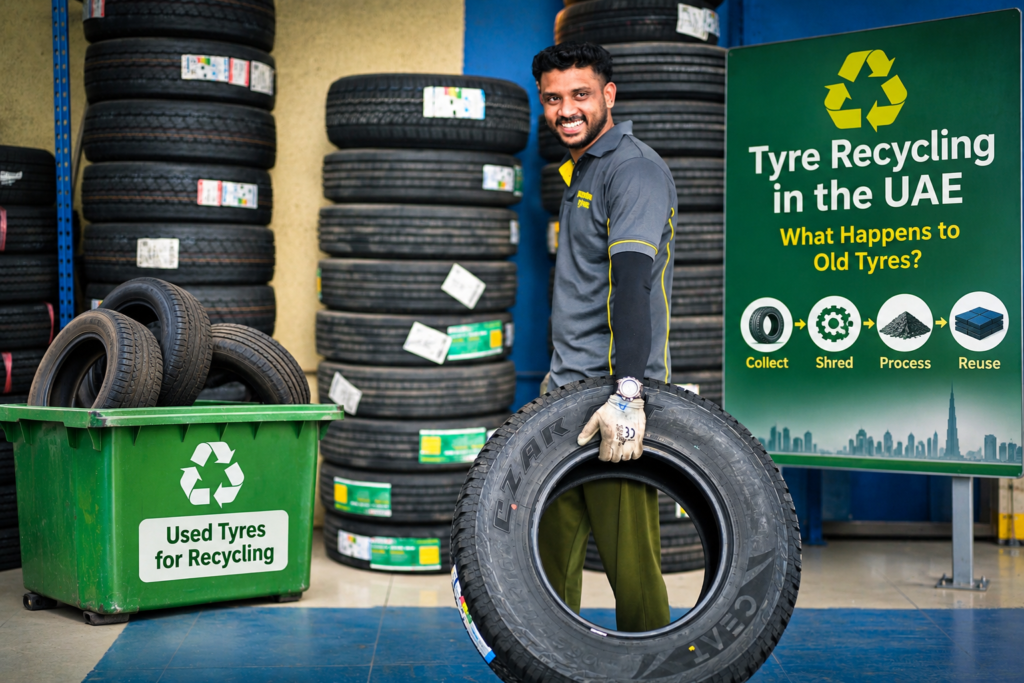
The recycling journey begins when a tyre reaches the end of its useful service life and is removed from a vehicle.
In the UAE, old tyres can enter the waste management system through several channels, depending on the emirate and the organisation handling them.
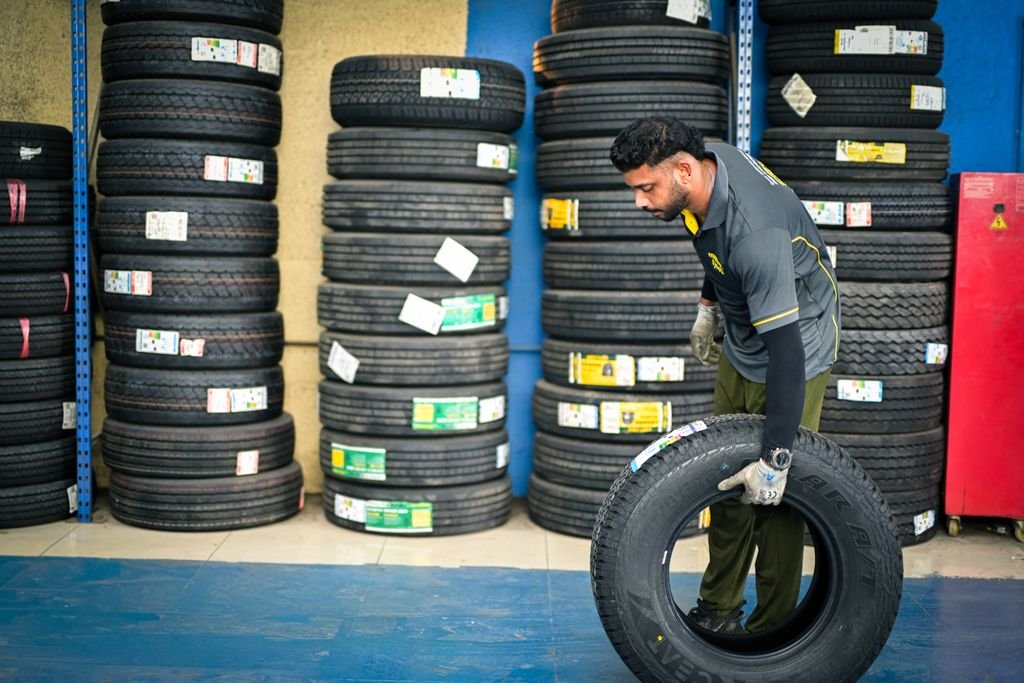
Tyre retailers, garages and vehicle service centres regularly handle used tyres during replacement work.
These businesses may collect removed tyres and arrange for their transfer to authorised waste handlers or recycling facilities.
Vehicle owners should ask what happens to their old tyres rather than assuming that every discarded tyre automatically enters a recycling programme.
Waste management companies and authorised collectors can transport used tyres from businesses, workshops and designated collection locations.
For commercial quantities, businesses may arrange scheduled collections depending on the service provider and local authority requirements.
Before processing, collected tyres may be sorted according to their condition, size and type.
Passenger-car tyres, commercial vehicle tyres and larger off-road tyres can have different handling and processing requirements.
The tyres are then transported to an appropriate facility using suitable waste collection arrangements.
In Dubai, Dubai Municipality publishes specific technical guidance for used-tyre collection, trading and recycling activities. This reflects the importance of handling tyre waste through properly authorised waste management channels.
Once old tyres reach a recycling facility, they are assessed and directed towards the most appropriate recovery or treatment process.
Not every tyre follows exactly the same route. The condition of the tyre, available processing technology and the facility's capabilities influence what happens next.
The first stage involves checking the collected tyres and separating them according to their condition and material characteristics.
Where suitable and permitted, tyres that remain fit for an approved secondary use may be considered separately. Tyres that are no longer suitable for reuse are directed towards material recovery or other authorised treatment methods.
Depending on the processing system, certain components may be removed before the tyre enters the main recycling machinery.
This helps prepare the material for more efficient processing.
Large tyres are cut into smaller sections before entering industrial shredding equipment.
The shredding machinery breaks the tyres into manageable pieces called tyre chips or shreds.
These smaller pieces are easier to transport, separate and process further.
Modern recycling equipment uses mechanical separation methods to recover different materials.
Magnets help extract steel wires, while specialised separation equipment helps remove textile fibres and other unwanted materials.
The remaining rubber can then undergo additional processing to achieve the required particle size and purity.
Responsible tyre recycling is an important part of sustainable driving, but choosing quality tyres and replacing them at the right time is equally important. Regular tyre inspections help identify tread wear, damage and other issues before they affect driving safety.
Whether you need replacement tyres, professional tyre advice or assistance with your vehicle's tyre requirements, mathyo tyre can help you make informed decisions. Explore mathyo tyre for tyre solutions and support to keep your vehicle ready for UAE roads.