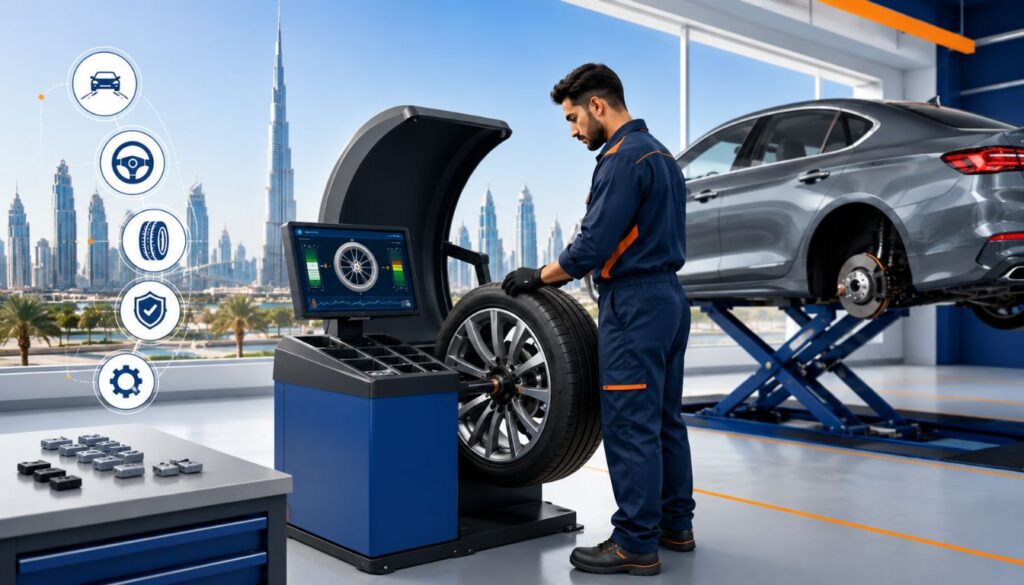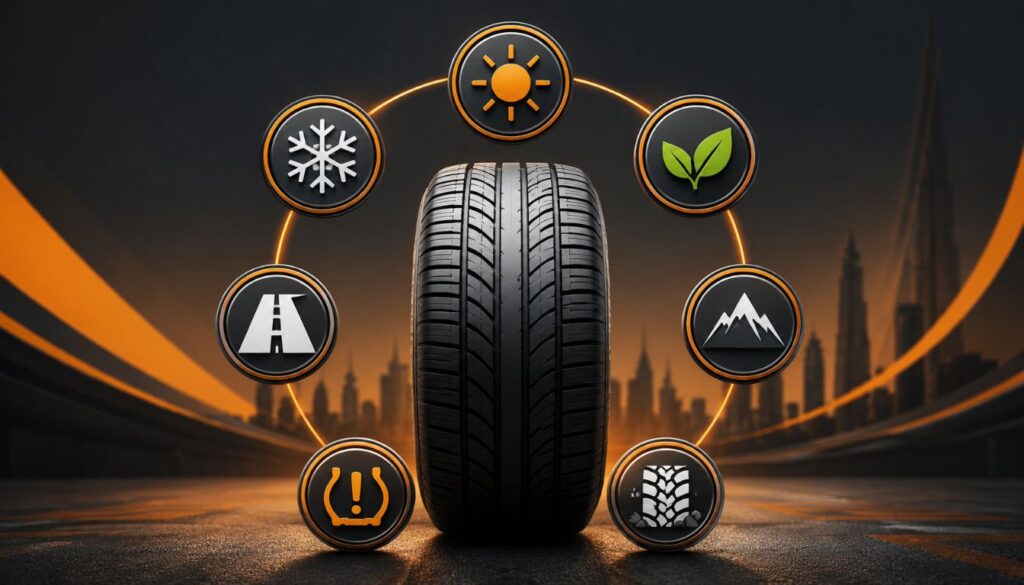

Choosing the right tyre is more important than many drivers realize. Different types of tyres are designed for different weather conditions, road surfaces, driving styles, and vehicle types. Using the wrong tyre can reduce safety, increase fuel costs, shorten tyre life, and affect how your car handles on UAE roads.
Whether you drive daily in Dubai traffic, travel long motorway distances, or enjoy desert adventures, understanding types of tyres in simple terms can help you make smarter decisions. This tyre guide for beginners covers everything from summer tyres and winter tyres to run-flat tyres, radial tyres, and tyres for desert driving.
In 2026, tyre technology continues to improve, but road conditions and climate challenges are also becoming tougher for drivers. UAE roads expose tyres to extreme heat, long highway distances, sudden braking situations, and high-speed driving. Temperatures above 45°C during summer can cause poor-quality or worn tyres to overheat quickly.
Road safety reports worldwide continue to show that tyre-related issues remain a major cause of accidents. Problems such as underinflation, worn tread, poor grip, and incorrect tyre selection can reduce braking performance and increase the risk of blowouts. This is especially important in the UAE, where hot asphalt and fast motorway driving put extra pressure on tyres.
The types of tyres you use also affects:
For example, eco tyres and touring tyres are designed to reduce rolling resistance and improve fuel economy, while performance tyres focus on sharper handling and grip. Meanwhile, SUV tyres and tyres for desert driving are built with stronger sidewalls and tougher tread patterns to handle sand, gravel, and rough terrain.
Understanding the different types of tyres helps you avoid unnecessary tyre wear and choose the safest option for your driving needs.
Summer tyres are the most common types of tyres used in the UAE. They are designed for warm temperatures, dry roads, and high-speed stability.
These tyres use a rubber compound that performs best in hot weather. Their tread patterns maximize road contact, improving grip, cornering, and braking performance on dry roads. Many premium brands like Michelin, Bridgestone, and Goodyear offer advanced summer tyres specifically designed for hot climates.
For Dubai, Abu Dhabi, and Sharjah roads, summer tyres are usually the best year-round option for most drivers.
Winter tyres are specially designed for cold temperatures, snow, and icy roads. They use softer rubber compounds that stay flexible in freezing conditions.
The tread pattern contains deeper grooves and biting edges that improve traction on slippery roads. While winter tyres are essential in Europe, Canada, and snowy regions, they are generally unnecessary for UAE driving.
If you travel abroad during winter months, switching to winter tyres can significantly improve safety.
Many drivers confuse all-season tyres with all-weather tyres, but there is a difference.
All-season tyres combine features of summer tyres and winter tyres. They are designed for moderate climates where weather changes throughout the year.
These tyres provide balanced performance in dry, wet, and mildly cold conditions. However, they are not as strong as dedicated summer tyres in extreme heat or winter tyres in snow.
All-weather tyres are more winter-capable than all-season tyres. They are designed to handle heavier rain, colder temperatures, and occasional snow while still working in warmer weather.
For UAE drivers, all-season tyres may work in cooler northern regions or for drivers who travel internationally, but summer tyres still remain the preferred choice for most local conditions.
Run-flat tyres allow you to continue driving for a limited distance after a puncture. These tyres have reinforced sidewalls that support the vehicle even when air pressure is lost.
Many luxury vehicles and modern SUVs now come factory-equipped with run-flat tyres.
Most run-flat tyres allow driving for around 80 km at reduced speeds after losing air pressure.
For UAE motorway driving, run-flat tyres can provide peace of mind, especially during long highway journeys between emirates. However, some drivers prefer traditional tubeless tyres because they offer a softer and quieter ride.
Performance tyres are designed for speed, cornering stability, and maximum grip. These tyres are commonly used on sports cars, luxury sedans, and high-performance SUVs.
They often feature low profile tyres, stiffer sidewalls, and advanced tread compounds for sharper handling.
Performance tyres are popular among UAE car enthusiasts because they handle well on smooth highways and offer excellent control at higher speeds.
Touring tyres focus on comfort, low road noise, and long tread life. Eco tyres, also known as fuel efficient tyres, are designed to improve mileage and reduce fuel consumption.
These tyres are ideal for daily commuting and family driving.
Touring tyres prioritize:
Eco tyres reduce rolling resistance, helping the engine use less energy. Many also feature improved EU tyre label rating scores for efficiency and wet grip rating tyres performance.
Drivers who spend hours commuting between Dubai and Abu Dhabi often prefer touring tyres for comfort and efficiency.
Understanding tyre construction is an important part of tyre types explained for beginners.
90∘90^{\circ}90∘
Radial tyres are the standard tyre construction used in modern vehicles. Their internal cords run perpendicular to the direction of travel, improving flexibility and road contact.
Most passenger cars in the UAE use radial tyres because they perform well in hot conditions.
Tubeless tyres do not use an inner tube. Instead, the tyre seals directly against the wheel rim.
Today, nearly all modern passenger vehicles use tubeless tyres.
Directional tyres are designed to rotate in one specific direction. Their tread pattern often forms a V-shape to channel water away efficiently.
Directional tyres are commonly used in performance tyres and wet-weather applications.
Asymmetric tread tyres have different tread patterns on the inner and outer sides of the tyre.
The outer section improves cornering grip, while the inner section enhances water evacuation and wet traction.
Many premium SUV tyres and performance tyres use asymmetric tread designs.
Different vehicles require different tyre strengths and tread patterns.
SUV tyres are built with:
They are ideal for larger vehicles driven on highways, rough roads, or light off-road terrain.
Van tyres are designed to carry heavier loads and handle commercial driving conditions.
Delivery vehicles and business fleets in the UAE rely on van tyres for durability.
Tyres for desert driving need special characteristics to handle sand and heat.
Many off-road enthusiasts reduce tyre pressure during dune driving to improve flotation on soft sand.
All-terrain SUV tyres are usually the best choice for drivers who frequently travel between highways and desert environments.
| Tyre Type | Best Climate | Best Road Type | UAE Suitability | Fuel Efficiency |
| Summer Tyres | Hot & dry | City & highways | Excellent | Good |
| Winter Tyres | Snow & ice | Cold roads | Poor | Low |
| All-Season Tyres | Mild climates | Mixed roads | Moderate | Moderate |
| All-Weather Tyres | Wet & cold | Mixed conditions | Moderate | Moderate |
| Run-Flat Tyres | Hot & dry | Highways | Very Good | Moderate |
| Performance Tyres | Warm climates | Smooth highways | Excellent | Moderate |
| Touring Tyres | Hot & dry | Daily commuting | Excellent | Good |
| Eco Tyres | Warm climates | Urban roads | Excellent | Excellent |
| SUV Tyres | Hot & rough terrain | Mixed roads | Excellent | Moderate |
| Desert Driving Tyres | Extreme heat & sand | Desert terrain | Excellent | Moderate |
| Driver Type | Recommended Tyre | Why It Fits |
| City Driver | Touring or Eco Tyres | Quiet ride, fuel savings, long lifespan |
| Off-Road / Desert Driver | SUV All-Terrain Tyres | Better sand traction and stronger sidewalls |
| Motorway Commuter | Summer or Touring Tyres | Stable high-speed handling and comfort |
Choosing the right tyre becomes easier when you know how to read the markings on the sidewall.
You may see numbers like:
This means:
Ask yourself:
Your driving habits help determine the best types of tyres.
For most UAE drivers:
Look for:
Premium tyres often display EU tyre label rating information to compare performance.
Always follow manufacturer recommendations for:
Using the wrong size can affect braking, suspension, and fuel economy.
Many drivers purchase tyres based only on price, but this can create safety and performance problems later.
Avoid these mistakes:
A quality tyre investment can improve safety, fuel savings, and overall driving comfort.
Understanding the different types of tyres helps drivers choose safer, more efficient, and longer-lasting options for their vehicles. From summer tyres and performance tyres to radial tyres, tubeless tyres, and tyres for desert driving, each tyre type is designed for specific road conditions, climates, and driving styles.
For most UAE car owners, summer tyres, touring tyres, and SUV tyres provide the best balance of heat resistance, comfort, fuel efficiency, and road safety. Choosing the right tyre not only improves grip and braking performance but also helps reduce fuel costs and extend tyre life in demanding UAE driving conditions.
At mathyo tyres, we help drivers make smarter tyre decisions with reliable solutions designed for UAE roads, highways, and desert terrain. Whether you are looking for durable SUV tyres, fuel efficient touring tyres, or dependable everyday tyres, mathyo tyres is committed to helping you drive safer, smoother, and with greater confidence in 2026 and beyond.