
A flat car battery can leave you unable to start your vehicle, often at the most inconvenient time. Whether your car refuses to start in the morning or struggles after sitting unused for several weeks, having the right equipment can save time and prevent unnecessary inconvenience. Two popular solutions are a car battery charger and a jump starter, but they serve different purposes.
Understanding the difference between a car battery charger vs jump starter helps you choose the right device for your situation. A battery charger gradually restores the battery's stored power, while a jump starter provides a temporary burst of electricity to help start the engine.
Both devices can be useful for everyday car owners, but knowing when to use each one is important. This guide explains how they work, their advantages, key differences and what to consider before purchasing either device.
A car battery charger is an electrical device designed to restore power to a vehicle's battery. It connects to an external power source and supplies electricity to the battery over a period of time.
Unlike a jump starter, a battery charger is designed to recharge the battery rather than provide the immediate power needed to start the engine.
Modern chargers often include automatic charging functions that monitor the battery's condition and adjust the charging process accordingly.
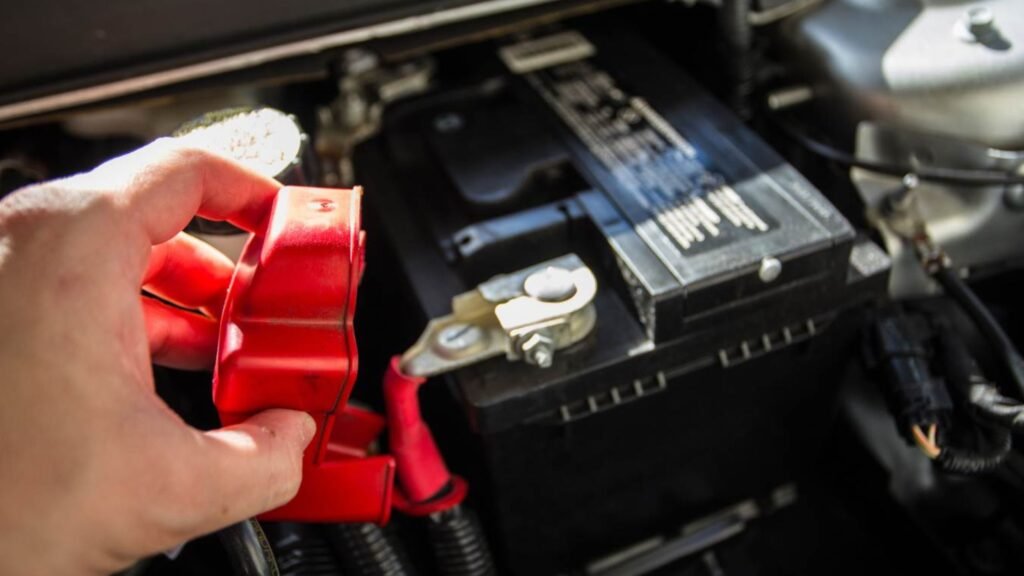
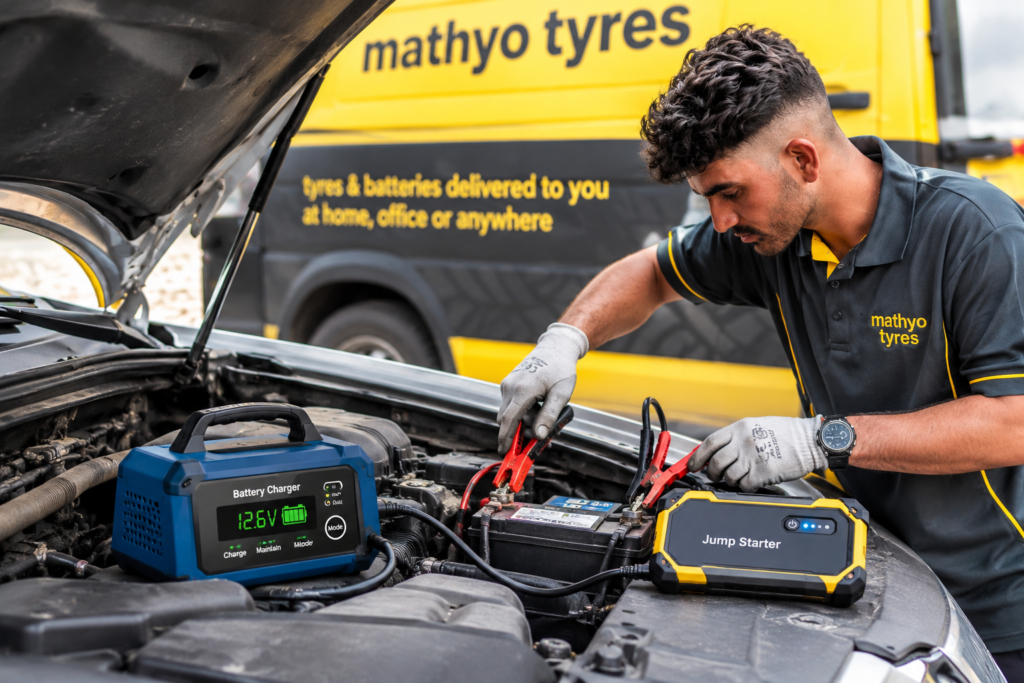
A typical car battery charger connects to the battery terminals using positive and negative clamps. Once connected to a suitable power supply, it transfers electrical energy into the battery.
Many modern models use multiple charging stages to improve charging efficiency and protect the battery.
These stages generally include:
A smart car battery charger can automatically manage these stages, making it easier for people without technical knowledge to maintain their vehicle batteries.
Different chargers are available depending on battery requirements and charging preferences.
A battery charger is particularly useful for vehicles that remain parked for extended periods or regularly experience battery discharge.
A car jump starter is a portable device that supplies a powerful burst of electrical energy to help start a vehicle with a flat or weak battery.
It is commonly known as a battery jump starter, battery booster or jump starter pack.
Unlike traditional jump-starting methods that require another vehicle and jumper cables, a portable jump starter usually contains its own rechargeable battery. This allows drivers to attempt an emergency start without relying on another car.
A portable jump starter connects directly to the vehicle battery using positive and negative clamps.
When activated, it supplies a high level of current for a short period. This provides the starter motor with enough electrical power to turn the engine over.
Once the engine starts, the vehicle's charging system can begin replenishing the battery, provided the alternator and battery are functioning correctly.
Most modern jump starters include additional safety and convenience features, such as:
A portable jump starter is especially useful when your vehicle battery unexpectedly loses enough power to start the engine.
For example, if you leave your headlights switched on overnight and discover that your car will not start the following morning, a suitable jump starter may help you get moving without waiting for roadside assistance.
However, a jump starter does not repair a damaged battery or replace a proper charging process.
Although both devices help with battery-related problems, their functions, charging methods and practical applications are different.
Here is a straightforward comparison:
| Feature | Car Battery Charger | Car Jump Starter |
| Main purpose | Recharges the battery | Starts a vehicle with a weak battery |
| Power source | Usually mains electricity | Built-in rechargeable battery |
| Charging process | Gradual charging | Short burst of high current |
| Portability | Depends on the model and power supply | Generally highly portable |
| Charging time | Usually several hours | Designed for immediate starting assistance |
| Another vehicle required | No | No |
| Maintenance use | Yes, with suitable models | Not intended for regular battery maintenance |
| Emergency use | Less convenient without a power supply | Very convenient |
| Best for | Restoring and maintaining battery charge | Emergency engine starting |
The most important distinction is what happens to the battery.
Charging a car battery with a charger means restoring its stored electrical energy. The process takes time, depending on the battery's capacity, condition and charger's output.
Charging a car battery with a jump starter is not quite accurate because most portable jump starters are designed to provide temporary starting assistance rather than fully recharge the vehicle battery.
A jump starter helps the engine start, but it should not be treated as a replacement for a dedicated battery charger.
A battery charger is the better option when your vehicle needs its battery restored or maintained rather than an immediate engine start.
Consider using one in the following situations.
Vehicles that remain unused for long periods can gradually lose battery charge. Modern vehicles also consume small amounts of electricity while parked.
A suitable automatic car battery charger with a maintenance mode can help keep the battery charged during extended periods of inactivity.
If your vehicle repeatedly experiences low battery power, charging it may help restore its charge.
However, repeated discharge can indicate an underlying problem, such as an ageing battery, faulty alternator or electrical drain.
Charging alone will not resolve these issues.
A compatible smart car battery charger can help maintain the battery when your vehicle is not driven regularly.
Some models offer maintenance or float charging modes that help keep the battery at an appropriate charge level.
Always follow the manufacturer's instructions and select a charger compatible with your battery type.
Most conventional battery chargers require access to mains electricity.
This makes them more suitable for home garages, workshops and situations where the vehicle can remain parked while charging takes place.
A portable jump starter is generally the more practical choice when you need to start your vehicle quickly and do not have access to another car.
Here are some common situations where it can help.
If the battery has insufficient power to operate the starter motor, a compatible jump starter may provide the additional current required to start the engine.
This is particularly helpful when you are parked away from home.
A portable jump starter is convenient for road trips because it does not depend on an external power supply or another vehicle.
Keeping one in your boot can provide additional reassurance if your battery unexpectedly loses charge.
Traditional jump-starting often requires another vehicle with a suitable battery and jumper cables.
A portable battery booster removes that requirement, allowing you to attempt a jump-start independently.
Jump starters are designed for situations where waiting several hours for a conventional charging process is impractical.
However, if the battery is severely damaged, completely failed or unable to hold charge, even a powerful jump starter may not start the vehicle.
For some drivers, owning both devices is a practical decision because they solve different problems.
A battery charger is useful for restoring and maintaining battery charge, while a jump starter provides emergency starting assistance.
Having both can be beneficial if:
However, owning both is not essential for every car owner.
If you mainly want protection against unexpected starting problems, a portable jump starter may be the more practical first purchase.
If your priority is maintaining a vehicle battery or recharging it after discharge, a suitable battery charger is the better investment.
Before purchasing either device, consider your vehicle's requirements and how you intend to use the equipment.
For a battery charger, check its charging current, usually measured in amperes (A). Higher charging current can reduce charging time, provided it is suitable for your battery.
For a jump starter, check its starting current and compatibility with your vehicle's engine.
Do not select a device based on its advertised peak current alone.
If you want equipment for roadside emergencies, portability is important.
A compact jump starter is generally easier to store in your vehicle than a conventional charger that requires a mains electricity connection.
Battery chargers are more appropriate for home use or workshops where portability is less important.
Not every charger or jump starter works with every vehicle battery.
Check the following before purchasing:
A 12V battery charger is commonly suitable for compatible passenger-car batteries, but always verify the manufacturer's specifications.
Safety should be a priority when working with vehicle batteries.
Look for features such as reverse polarity protection, short-circuit protection, temperature protection and overcharge protection where applicable.
Always follow the supplied instructions and avoid using equipment with damaged cables or clamps.
For a portable jump starter, consider its internal battery capacity, starting current and number of starting attempts supported under the manufacturer's specified conditions.
For a charger, consider its output current, supported battery capacities and available charging modes.
Choose equipment that meets your actual vehicle requirements rather than purchasing the most powerful or expensive model.
Choosing between a car battery charger vs jump starter depends on whether you need to restore battery power or start your vehicle during an emergency.
A car battery charger is the better choice for gradual charging, regular battery maintenance and vehicles that remain unused for extended periods. A portable jump starter is more suitable for unexpected battery problems when you need to get your vehicle started without relying on another car.
For everyday drivers, a portable jump starter can be a valuable emergency accessory, while a smart battery charger offers a more suitable solution for long-term battery maintenance.
Remember that neither device can fix a permanently damaged battery or a faulty vehicle charging system. If your car regularly struggles to start, professional battery testing can help identify the cause and determine whether a replacement is necessary.
For reliable tyre care, vehicle maintenance and professional assistance, mathyo tyres can help you keep your vehicle ready for the road.