
Summary
“Running a fleet in Dubai means fighting heat, downtime, and unpredictable garage schedules. This guide breaks down what a reliable fleet tyre supplier in Dubai actually delivers from bulk pricing to on-site fitting.”
Every fleet manager in Dubai deals with the same problem sooner or later: a vehicle off the road because of a tyre issue that could have been caught earlier. For a single car, that's an inconvenience. For a fleet of 20, 50, or 200 vehicles, it's lost revenue, missed deliveries, and unpredictable maintenance bills.
A fleet tyre supplier in Dubai does more than sell rubber. A proper supplier manages sourcing, inspection schedules, fitting logistics, and documentation, so tyre issues stop being emergencies and start being routine maintenance. This guide covers how fleet tyre management works in the UAE, what to check before choosing a supplier, and how to build a schedule that actually reduces downtime.
Fleet tyre management is the ongoing process of keeping every vehicle in a fleet on safe, correctly matched tyres, without pulling vehicles off schedule more than necessary. It covers four areas:
Managing tyres for one car is reactive: you notice wear, you book a garage, you wait. Managing tyres for a fleet has to be proactive, because the cost of reacting late multiplies with every vehicle you operate.
Dubai's climate is harder on tyres than most drivers realise. Road surface temperatures regularly exceed air temperature by a wide margin during summer months, and sustained heat softens rubber compounds, accelerates tread wear, and raises the risk of blowouts on highway routes. Combine that with high daily mileage, stop-start delivery routes, and heavier-than-average vehicle loads, and fleet tyres wear out noticeably faster than the average private car.
As a general reference point, most passenger vehicle tyres in Dubai last around 2–3 years or 40,000–60,000 km under normal use. Fleet vehicles, especially delivery vans, ride-hailing cars, and construction pickups typically fall on the lower end of that range, or below it, because of higher daily distances and continuous loading.
Not every tyre shop is set up to handle fleet accounts. Before signing an agreement, fleet managers should confirm the following:
| Criteria | Why It Matters | What to Confirm |
| Genuine stock | Prevents early failure and voided warranties | ESMA compliance, correct DOT manufacturing date, sourcing from authorised dealers |
| Bulk pricing | Controls cost per vehicle at scale | Tiered pricing based on order volume or fleet size |
| Fitting coverage | Reduces vehicle downtime | Mobile fitting radius, workshop hub locations |
| Credit terms | Improves cash flow for growing fleets | Required documents, credit period (typically 15–45 days) |
| Response time | Limits breakdown-related delays | Same-day or next-day mobile response |
| Reporting | Supports maintenance planning | Tyre health reports, inspection logs |
Tyres regulated under the Emirates Authority for Standardization and Metrology (ESMA) carry verified specifications, which matters for fleets that need consistent performance across many vehicles, not just a single good tyre. Suppliers working from central hubs for example, industrial areas like Dubai Investment Park or Al Quoz can usually offer faster turnaround because they stock volume and dispatch technicians from a fixed base rather than a single retail counter.
Bulk tyres in Dubai are priced differently from single retail purchases. Suppliers typically structure pricing in tiers: the more tyres ordered per transaction or per contract period, the lower the per-unit cost. For fleets, this only works well if the fleet also standardises tyre brands and models across similar vehicle types.
Standardisation matters for two reasons. First, it simplifies stock planning a supplier can hold consistent inventory for your fleet instead of sourcing one-off sizes. Second, it lowers admin overhead, since technicians and drivers don't need to track multiple tyre specifications per vehicle category.
Lead time is the other factor to plan around. Bulk orders for less common sizes may take longer to source than standard passenger car sizes, so fleets running specialised vehicles (buses, heavy trucks) should confirm typical lead times with a supplier before committing to a full fleet contract.
A commercial tyre supplier in Dubai usually offers two fitting models: workshop-based servicing and mobile or doorstep fitting. Each suits different fleet structures.
| Factor | Workshop Fitting | Mobile/Doorstep Fitting |
| Vehicle downtime | Higher travel and queue time | Lower technician comes to the vehicle |
| Best for | Fleets near a hub, batch servicing days | Distributed fleets, urgent single-vehicle jobs |
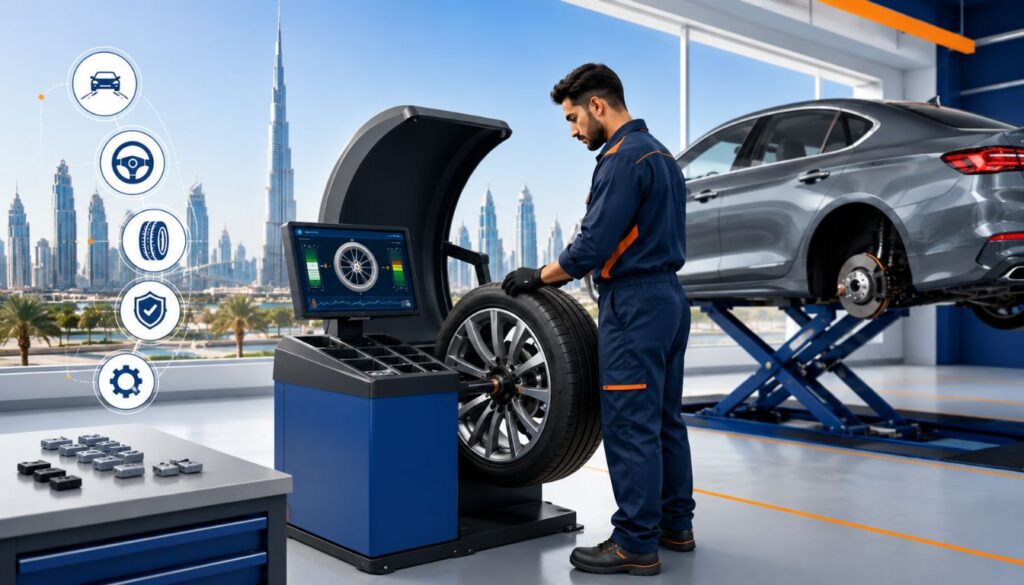
| Mechanical add-ons | Available on-site (brakes, alignment, battery) | Limited to tyre-related work |
| Scheduling | Fixed slots | Flexible, on-demand |
For fleets spread across the city delivery vans on different routes, staff cars at different offices mobile fitting reduces the total hours vehicles spend off the road. A typical mobile tyre change takes roughly 30–45 minutes once a technician arrives, compared to the two to three hours often lost to travel, queuing, and waiting at a traditional garage. Workshop visits still make sense when a vehicle needs combined mechanical work, such as brake pads, wheel alignment, or a battery check, alongside tyres.
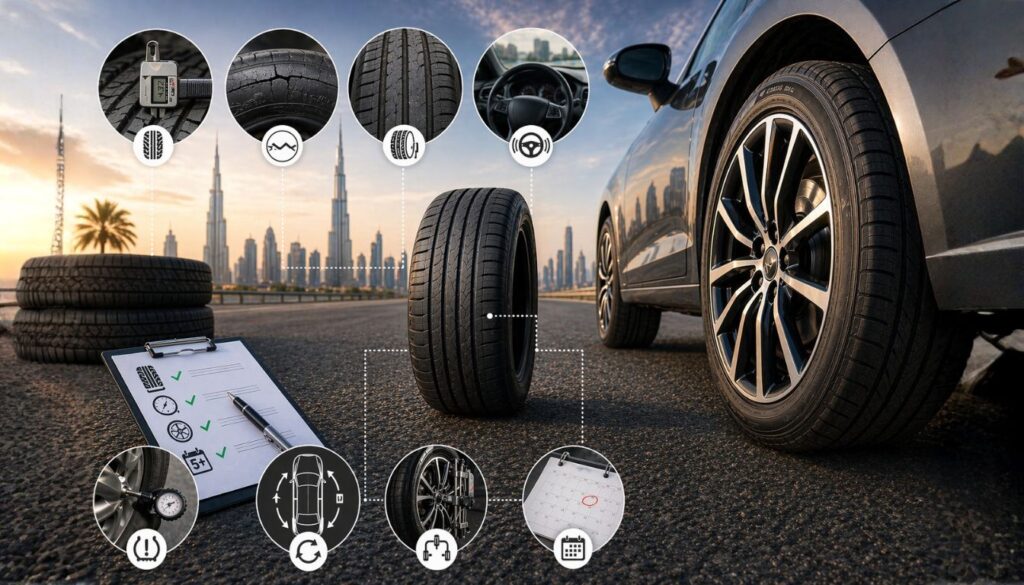
Fleet tyre management in the UAE works best on a fixed inspection rhythm rather than ad hoc checks. Inspection frequency should vary by vehicle use:
The chart below illustrates why: vehicles with higher daily mileage or heavier loads tend to reach the end of tyre life faster, so their inspection cycle needs to be shorter.
Estimated Tyre Life by Fleet Vehicle Type
| Vehicle Type | Typical Daily Mileage | Estimated Tyre Life (km) |
| Last-mile delivery van | High | 25,000–35,000 |
| Ride-hailing sedan | High | 30,000–40,000 |
| Staff transport bus | Medium | 40,000–55,000 |
| Corporate staff car | Low–Medium | 45,000–60,000 |
| Construction/FM pickup | Medium (heavy load) | 20,000–30,000 |
These figures are directional estimates for planning purposes and will vary by driving style, road type, and tyre brand.
A useful KPI set for fleet managers includes tread depth at each inspection, tyre pressure readings, replacement date per vehicle, and cost per kilometre driven on tyres. Tracking these over time makes it easier to spot vehicles wearing tyres faster than expected, which often points to alignment or load issues rather than the tyres themselves.
Tyre demands differ by fleet type, which is why a one-size approach rarely works:
Fleets without a structured tyre programme tend to pay more over time, not less. The comparison below outlines the main cost differences.
| Cost Factor | Reactive (No Schedule) | Managed Fleet Tyre Programme |
| Vehicle downtime | Unplanned, higher | Scheduled, minimised |
| Emergency callouts | Frequent | Rare |
| Tyre lifespan | Shorter (uneven wear goes undetected) | Extended (regular checks catch issues early) |
| Budget predictability | Low | High (volume pricing plus credit terms) |
Beyond direct cost, worn tyres increase braking distance and reduce grip, which raises safety risk at highway speeds, a liability concern for any business operating a commercial fleet. Following UAE road safety guidelines and maintaining tyres through regular inspections can help reduce avoidable risks and improve fleet safety.
Opening a fleet account with a tyre supplier is usually a short process:
Most tyre suppliers can activate an account within one to two business days once documentation is submitted.