
Your car battery can become weak gradually, or it can fail with little warning. Recognising the Signs of Bad Car Battery early can help you avoid getting stranded at home, at work, or on the roadside.
A weak battery may still start your vehicle today but struggle tomorrow, particularly when the battery is ageing or the vehicle has been exposed to demanding driving conditions. Symptoms can include slow engine cranking, dimming lights, electrical issues, dashboard warnings and repeated starting problems.
But how do you know whether the problem is actually the battery?
In this guide, we explain the most common bad car battery symptoms, how to distinguish a battery problem from an alternator issue, and when it makes sense to have the battery tested or replaced.
Some battery problems are obvious, while others develop gradually. The most common warning signs include:
Let's look at each symptom in more detail.
One of the most noticeable weak car battery symptoms is slow engine cranking.
When you start the car, the engine should crank quickly and consistently. If the starter sounds slower than normal or the engine takes longer to turn over, the battery may not be supplying enough starting power.
You may notice:
Slow cranking does not automatically prove that the battery is defective. Starter or charging-system problems can create similar symptoms, which is why testing is useful.
A vehicle that repeatedly struggles to start can be showing one of the clearest car battery going bad signs.
The problem may be more noticeable after the car has been parked for several hours or overnight. You might hear the engine attempting to start without enough power to crank properly.
If the problem happens repeatedly, don't simply rely on jump-starting the vehicle. A battery that repeatedly needs external assistance should be inspected.
A clicking sound when turning the ignition can occur when the starter does not receive enough electrical power.
A weak or discharged battery is one possible cause, particularly when the lights and other electrical components also appear weak.
However, clicking can also be related to connections, the starter system or other electrical faults.
That means a clicking sound alone isn't enough to diagnose a bad battery.
Dimming lights can be another indication of a battery or charging-system problem.
Pay attention if:
If several electrical symptoms appear together with starting problems, it is worth having the vehicle's battery and charging system checked.
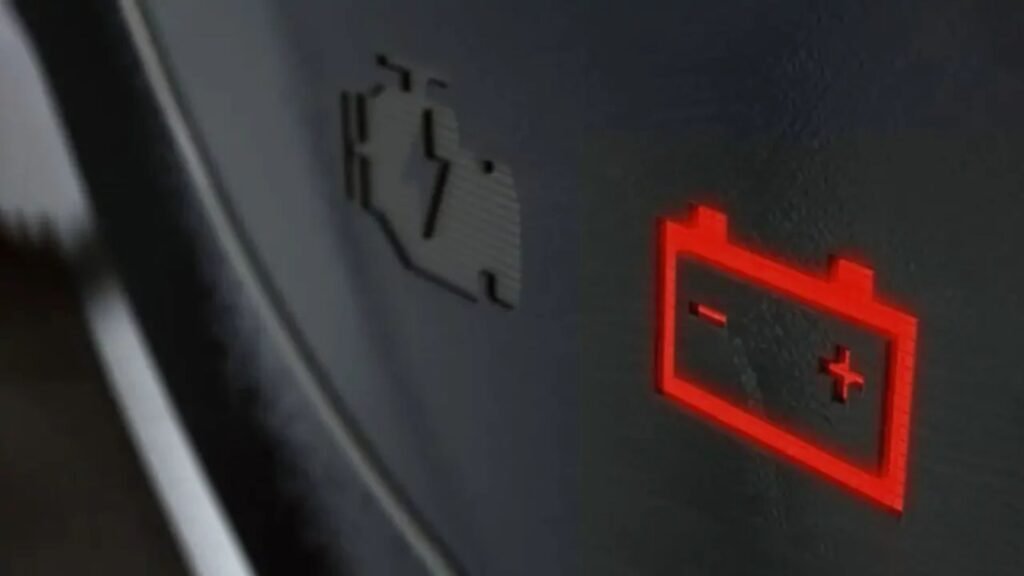
A battery-shaped warning light on the dashboard should not be ignored.
Importantly, this light does not necessarily mean the battery itself has failed. It can indicate a problem with the vehicle's charging system, including the alternator or related electrical components.
Therefore, if the battery warning light comes on, the appropriate next step is diagnosis rather than immediately replacing the battery.
A weak or unstable electrical supply can sometimes be associated with unusual behaviour from vehicle electronics.
You may notice issues such as:
These symptoms can have several possible causes, so they should be assessed together rather than treated as proof of battery failure.
If your car repeatedly needs a jump start, something needs investigating.
A jump start can temporarily provide enough power to start the vehicle, but it doesn't fix the underlying problem.
Repeated jump starts may be associated with:
If the same problem keeps returning, have the battery and charging system tested instead of continuing to rely on jump starts.
Physical battery damage can be an important warning sign.
Look for:
A visibly damaged battery should be professionally assessed. Avoid handling a damaged battery unnecessarily and follow the manufacturer's safety instructions.
Corrosion around battery terminals can interfere with electrical connections.
A buildup around the terminals may appear as a white, blue or greenish deposit depending on the materials involved.
However, terminal corrosion doesn't automatically mean the battery itself has failed. Cleaning, connection inspection and battery testing can help determine the actual cause.
Battery age is another reason to pay attention to starting performance and other warning signs.
Even when a battery still starts the vehicle, its ability to deliver reliable starting power can decline over time.
If an older battery begins showing multiple symptoms such as slow cranking, repeated starting problems or electrical issues testing can help determine whether replacement is appropriate.
A weak car battery may still start your vehicle, but it may struggle to provide sufficient power consistently.
A dead battery, on the other hand, may provide little or no usable starting power.
A completely dead battery may simply be discharged rather than permanently defective. Testing is therefore important before deciding that the battery needs replacement.
One of the most common questions is whether the problem is the battery or alternator.
The symptoms can overlap, which explains why searches for bad alternator vs battery symptoms and battery vs alternator symptoms are common. The supplied keyword list specifically includes many variations around this diagnostic question.
| Symptom | Possible Battery Problem | Possible Alternator Problem |
| Slow engine cranking | Yes | Possible |
| Repeated jump starts | Yes | Yes |
| Battery warning light | Possible | Common possibility |
| Dim electrical components | Possible | Possible |
| Battery repeatedly loses charge | Possible | Possible |
| Car stops running after starting | Less typical | Possible |
| Charging-system fault | No | Possible |
This table is only a starting point. Battery, alternator, starter and electrical faults can produce overlapping symptoms.
A proper diagnostic test is more reliable than trying to identify the failed component from one symptom.
If you're wondering how to tell if car battery is bad, start with the obvious symptoms and then move to testing.
Does the engine crank normally?
If it has become noticeably slower, note when the problem occurs.
Look for dim lights, unusual electrical behaviour or repeated starting issues.
Look for visible damage, swelling, leakage or significant terminal corrosion.
An older battery showing several warning signs deserves closer attention.
A professional battery test can provide more useful information than relying solely on symptoms.
Battery testing can help determine whether the battery has sufficient starting capability and whether further charging-system diagnosis is needed.
Yes. A weak battery can contribute to starting difficulties and unreliable electrical operation.
However, not every electrical problem originates from the battery.
Other possible causes include:
This is why replacing the battery without diagnosis isn't always the correct solution.
You should consider professional battery testing or replacement when you notice multiple signs your car battery is going bad, particularly when they are becoming more frequent.
Consider getting the battery checked if:
If the battery has failed testing, replacement with a correctly specified battery is generally the next step.
Vehicle batteries operate in a demanding environment, and drivers in Dubai should not wait until the car refuses to start before checking battery condition.
Frequent short journeys, long periods parked and high vehicle electrical demand can all affect how reliably the battery performs.
For drivers who depend on their vehicle every day, recognising early car battery failure symptoms can help prevent an unexpected breakdown.
If your vehicle won't start because of a suspected dead battery, avoid repeatedly attempting to start it.
First, check whether there are obvious signs of a wider electrical problem. If the battery has visible damage or leakage, don't attempt unnecessary handling.
If a jump start gets the vehicle running, the underlying cause should still be investigated. A battery that repeatedly loses charge may need testing, charging-system diagnosis or replacement.
If you're experiencing signs of bad car battery, the most useful next step is to identify whether the problem is actually the battery or another part of the vehicle's electrical system.
mathyo tyres provides mobile automotive support in Dubai, allowing drivers to get assistance at their home, office or roadside location. Its existing service information also highlights mobile service, emergency support and professional technicians across Dubai.
For a vehicle that is becoming difficult to start, battery testing and professional assessment can help determine the appropriate next step rather than replacing components unnecessarily.