
Dubai summer puts extra demands on tyres. High temperatures, hot road surfaces and long highway journeys can expose existing tyre problems that may otherwise go unnoticed. That is why checking your tyres before summer is a simple but important part of vehicle maintenance.
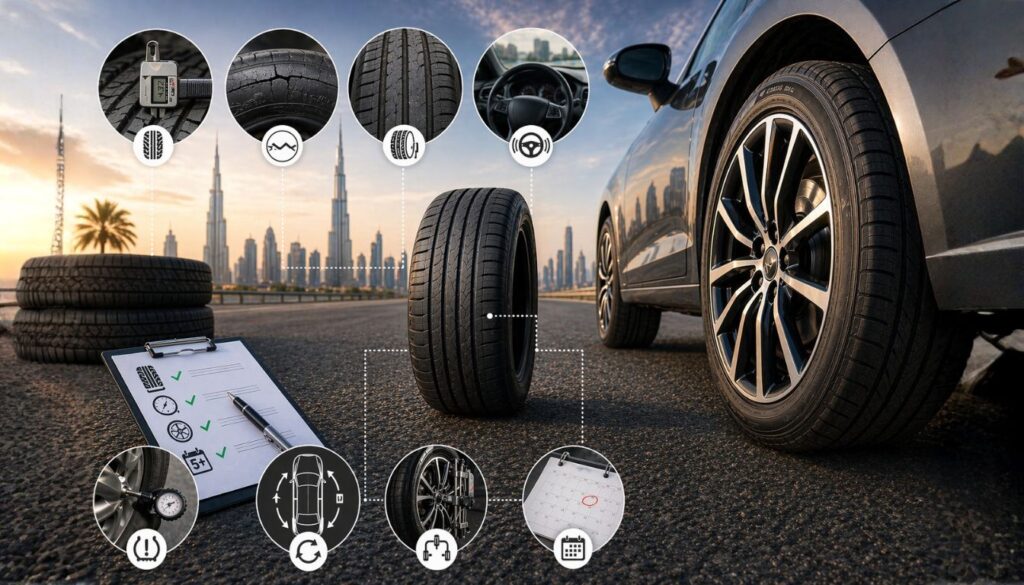
If you are wondering how to perform a tyre safety summer check, you do not need complicated equipment for the first inspection. Start with tyre pressure, tread, cracks, bulges, uneven wear, tyre age and visible damage. If anything looks abnormal, have the tyre professionally inspected before continuing to drive.
Dubai's Roads and Transport Authority (RTA) specifically advises motorists to check tyre pressure and ensure tyres are structurally sound and free from cracks during high-temperature conditions.
Summer heat does not automatically make a healthy tyre unsafe, but high temperatures make proper tyre condition and inflation more important.
Tyres already suffering from low tread, structural damage, cracks or incorrect pressure can become a greater concern when the vehicle is driven on hot roads or at highway speeds.
RTA's 2026 summer tyre safety guidance recommends regular vehicle checks and specifically calls for tyres to be correctly inflated, structurally sound and free of cracks.
That makes a pre-summer inspection worthwhile even if your tyres still appear usable at first glance.
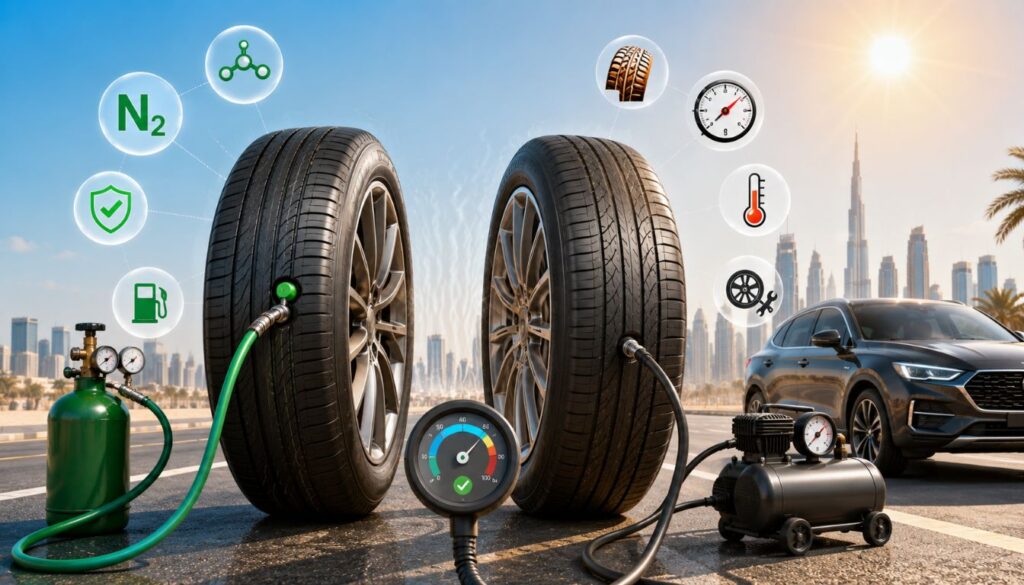
Tyre pressure should be one of the first things you check.
Pressure changes as tyres heat up during driving, so checking them after a long journey can give you a different reading from a cold-tyre measurement. RTA's driving guidance recommends checking tyre pressure and tread depth and checking tyres when cold.
Use the pressure recommended by your vehicle manufacturer rather than simply using the maximum pressure shown on the tyre sidewall.
Incorrect pressure can affect handling, braking, comfort and tyre wear. It can also make it harder for the tyre to perform as intended when road and ambient temperatures are high.
For a more detailed explanation, see our guide to tyre air pressure and its impact on performance.
Before starting a summer journey:
If one tyre repeatedly loses pressure, investigate the cause rather than simply adding air every few days.
Tread helps the tyre maintain appropriate contact with the road and evacuate water when driving on wet surfaces.
RTA's driving guidance states that tyre pressure and tread depth should be maintained at safe levels and identifies 1.5 mm as the minimum safe tread depth in its light-vehicle handbook.
However, you should not wait until a tyre is at the legal or minimum threshold before paying attention to deterioration.
Check whether the tread is:
If you are unsure about the requirements, read our guide to UAE tyre tread depth rules.
Sidewall cracking is one of the things you should specifically look for when preparing tyres for summer.
Inspect the sidewalls in good lighting and look for:
Not every small surface mark means that a tyre needs immediate replacement, but significant cracking or structural damage should not be ignored.
RTA's current summer guidance specifically advises drivers to ensure tyres are free of cracks.
If you find visible cracking, have the tyre inspected before undertaking a long journey.
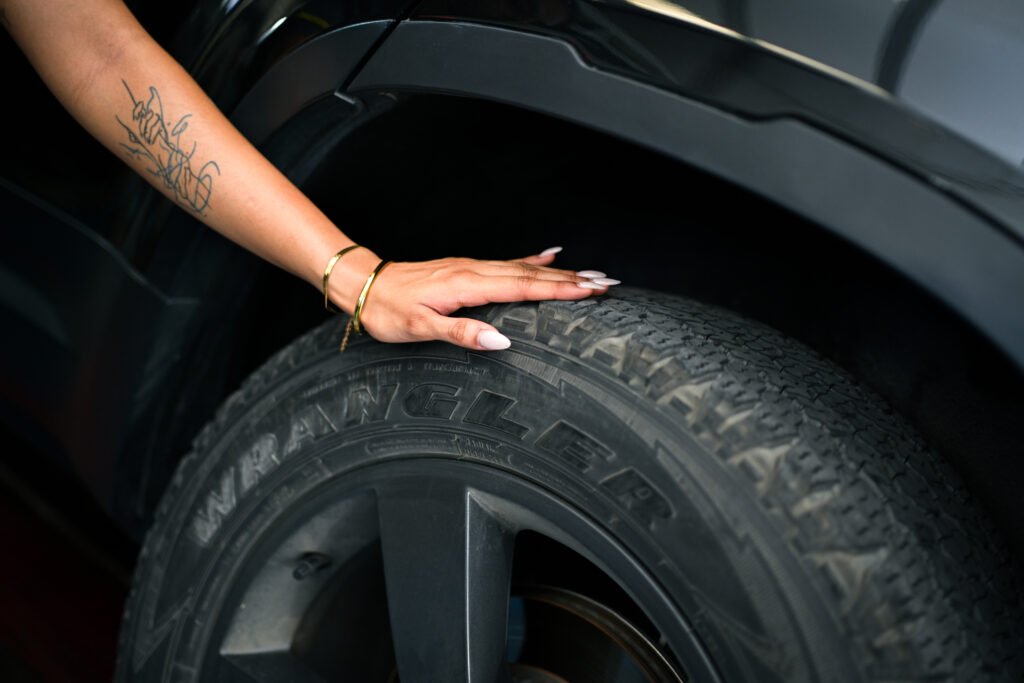
Walk around the vehicle and inspect the complete visible surface of each tyre.
A bulge can indicate internal structural damage. Deep cuts or exposed tyre components are also reasons to stop and seek professional assessment.
RTA's published technical inspection criteria identify issues such as deep cuts, bulges, exposed cords and other signs of carcass failure as tyre defects.
Do not assume that a tyre is safe simply because it is holding air.
A damaged tyre can require replacement even when its tread still appears relatively deep.
Check whether the tread is wearing evenly from one side of the tyre to the other.
Uneven wear can sometimes indicate issues beyond the tyre itself, such as:
If you notice one edge wearing much faster than the rest, do not simply replace the tyre without investigating the reason.
You can also read our guide to why tyres wear faster in Dubai for more information about common causes of accelerated tyre wear.
Tyre age matters just as much as visible tread.
Look at the tyre sidewall for its date code so you can determine when the tyre was manufactured. A tyre can have plenty of tread remaining while still being old enough to warrant closer inspection.
This is particularly relevant when preparing a vehicle for another hot summer in the UAE.
If you are not sure how to read the date code, see how to check your tyre year.
RTA service information also states that tyre validity is a maximum of five years from the manufacturing date for the referenced ownership-renewal context, and damaged tyres must be changed to pass inspection.
Sometimes the simplest question is the most useful:
Are these tyres still in good condition?
Look at the overall condition rather than focusing on one feature.
A tyre approaching the end of its usable life may show a combination of:
Our guide on tyre worn-out signs covers the main warning signs to look for.
If several warning signs appear together, it is sensible to have the tyres professionally inspected before summer highway driving.
A tyre that seems acceptable for a short daily commute deserves another inspection before a long-distance journey.
Long highway trips can mean extended periods of continuous driving, higher speeds and greater heat exposure.
Before travelling:
RTA's driving guidance recommends regular vehicle checks and specifically includes tyre pressure and tread depth among the items drivers should inspect.
A summer tyre check should not be limited to visual inspection.
Pay attention when driving. New or unusual vibration, steering shake or tyre noise can indicate a wheel, tyre or vehicle-related issue.
Possible causes can include uneven tyre wear, wheel imbalance, alignment problems or tyre damage.
If you notice vibration, have the wheels and tyres inspected rather than assuming the problem will disappear.
For drivers experiencing wheel-related vibration, our wheel balancing mobile service is relevant.
Tyre safety also means using the correct specification.
Check the tyre size, load index and speed rating against the vehicle manufacturer's requirements.
RTA technical inspection criteria state that tyre load or speed ratings below the vehicle manufacturer's specified rating can be a defect. The criteria also address tyre compatibility, different sizes on the same axle and tyre pressure.
If you are unsure what the numbers and letters on your tyre mean, our guide to understanding tyre sizes can help.
You can also learn more about tyre speed ratings before replacing your tyres.
It is easy to inspect only the front tyres because they are easier to see from the driver's position.
However, all tyres should be checked.
Walk around the entire vehicle and inspect:
Also check the spare if your vehicle has one.
A rear tyre with low pressure, cracking or damage can be just as important as an obvious problem on the front axle.
If your vehicle has been parked for an extended period, inspect the tyres before returning to regular driving.
Check the pressure first, then inspect the sidewalls and tread for visible problems.
Do not assume that tyres are unaffected simply because the car has not been driven. Age and environmental exposure continue over time.
Inspection is useful only if you act on what you find.
A tyre may need replacement when it has serious damage, significant deterioration, insufficient tread or other conditions that make continued use unsuitable.
Do not attempt to solve a structural tyre problem simply by increasing or decreasing air pressure.
If you believe your vehicle needs replacement tyres, our tyre replacement guide explains the situations to consider.
For drivers who are unsure whether replacement is necessary, our need new tires guide provides another useful checklist.
A visual inspection at home is useful, but it cannot identify every possible tyre or wheel problem.
If you notice:
get the tyres professionally inspected.
A technician can assess the tyre condition and identify whether another issue, such as balancing or alignment, may be contributing to the problem.
Before driving regularly in Dubai's summer conditions, run through this checklist:
| Check | What to look for |
| Tyre pressure | Correct cold pressure |
| Tread | Adequate and even tread |
| Sidewalls | No cracks, cuts or bulges |
| Surface | No exposed cords or major damage |
| Wear | No severe uneven wear |
| Age | Check manufacturing date |
| Size | Correct vehicle specification |
| Load rating | Meets manufacturer requirement |
| Speed rating | Meets manufacturer requirement |
| Vibration | No unusual steering or vehicle vibration |
| Spare tyre | Correct pressure and condition |
If you find a serious defect, do not wait for the tyre to fail before taking action.
You do not need to wait for the hottest day of the year.
A practical approach is to inspect your tyres before summer road trips and then continue checking them regularly throughout the season.
RTA's June 2026 summer campaign encourages motorists to make vehicle checks a regular habit, including checking tyre pressure and tyre condition.
It is particularly sensible to inspect your tyres before:
If your tyres show signs of wear, damage, pressure problems or age-related deterioration, professional inspection can help determine whether they are still suitable for use.
mathyo tyres provides tyre replacement, wheel balancing and tyre safety inspections across Dubai. Its supplied service information also states that mobile tyre fitting and replacement are available at locations such as homes, offices, basement parking areas and roadsides.
If replacement is required, the service information states that mathyo tyres supplies genuine tyres and provides professional fitting and replacement support across Dubai.
For drivers who do not want to take a vehicle to a workshop, the mobile service can be particularly useful when the tyres need to be replaced at home, work or another suitable location.
Knowing how to check tyres before summer can help Dubai drivers identify problems before they become more serious. Start with the basics: check cold tyre pressure, inspect tread depth, look for cracks and bulges, examine uneven wear, check the manufacturing date and make sure the tyre specification matches the vehicle.
Dubai's RTA specifically highlights correct tyre pressure and structurally sound, crack-free tyres as part of its summer tyre safety guidance.
If you discover serious damage, excessive wear or other warning signs, have the tyres professionally assessed rather than continuing to drive and hoping the problem will disappear.